Dm11
A minor eleventh opens the phrase with the ninth and eleventh above D minor.
VOICING
D3 · A3 · C4 · E4 · F4 · G4
1♭35♭7911
AT THE KEYBOARD
Connect a MIDI keyboard and play a chord. See its notes, explore possible chord names, and try changing the voicing. When you’re teaching, use the same view to show a student how the notes fit together.
01 / EXPLORE A VOICING
Play this ii–V–I from the bass upward. See where the eleventh, flat ninth, and sharp eleventh sit on the staff, then leave one out and listen to the difference. Connect each note you see with the color you hear.
A minor eleventh opens the phrase with the ninth and eleventh above D minor.
D3 · A3 · C4 · E4 · F4 · G4
A flat ninth adds tension to the dominant. This voicing leaves out the fifth.
G2 · F3 · A♭3 · B3 · E4
Resolve to a major ninth, with a sharp eleventh for a brighter Lydian color.
C3 · G3 · B3 · D4 · E4 · F♯4
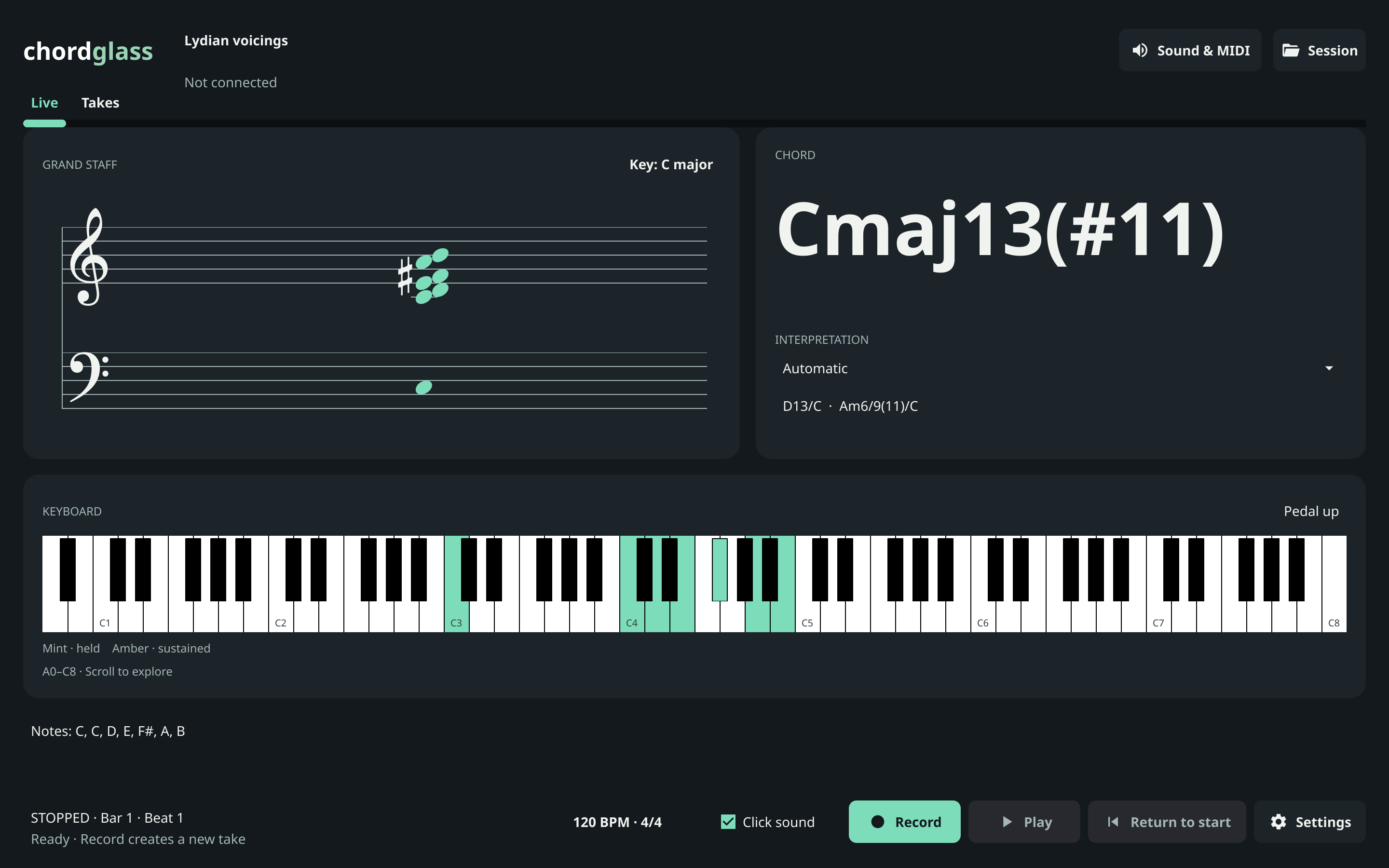
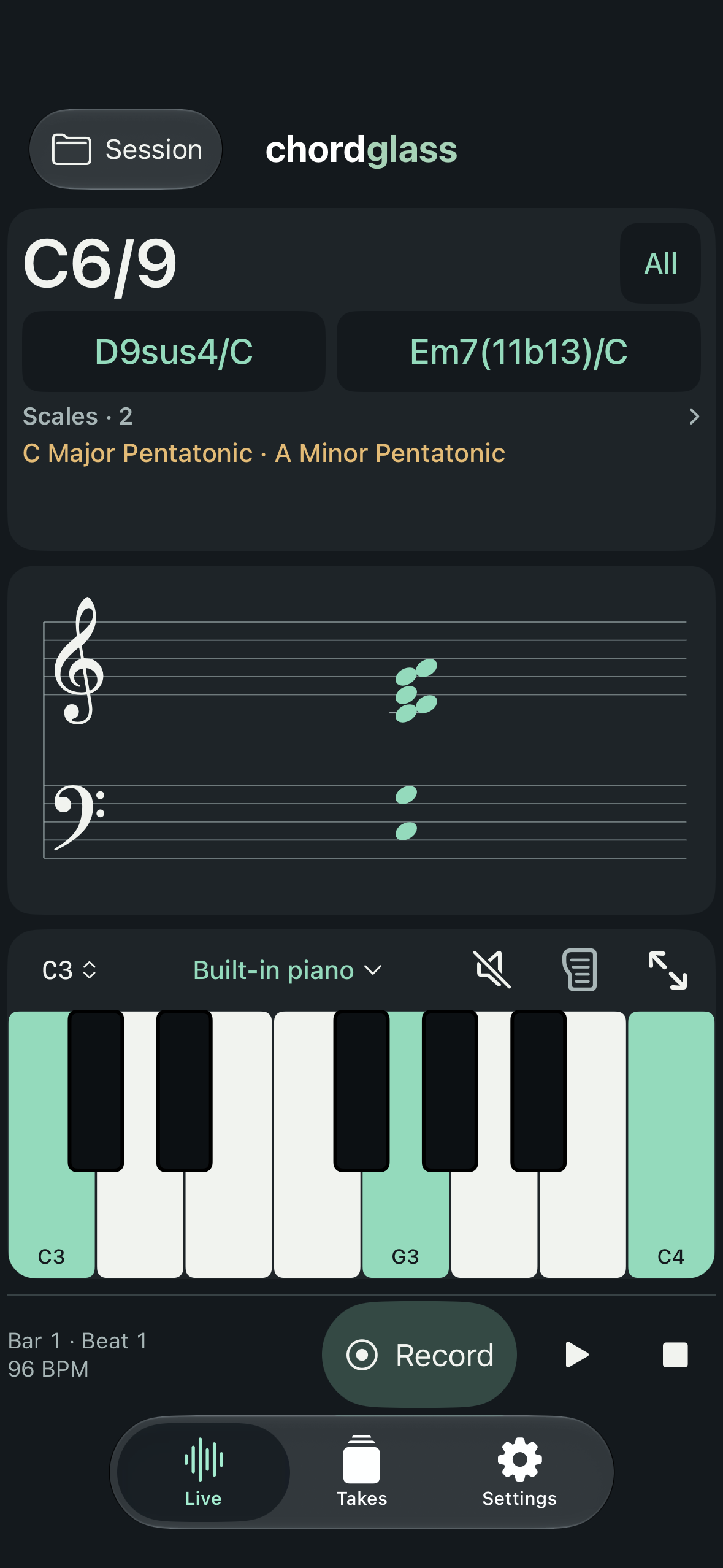
The Mac example explores another voicing with a sharp eleventh: Cmaj13(#11). A chord can have more than one useful reading. Chordglass shows alternatives so you can consider them in the phrase you’re playing. With two notes, interval details separate the named relationship from semitone distance and extra octaves.
FROM A CHORD TO A PHRASE
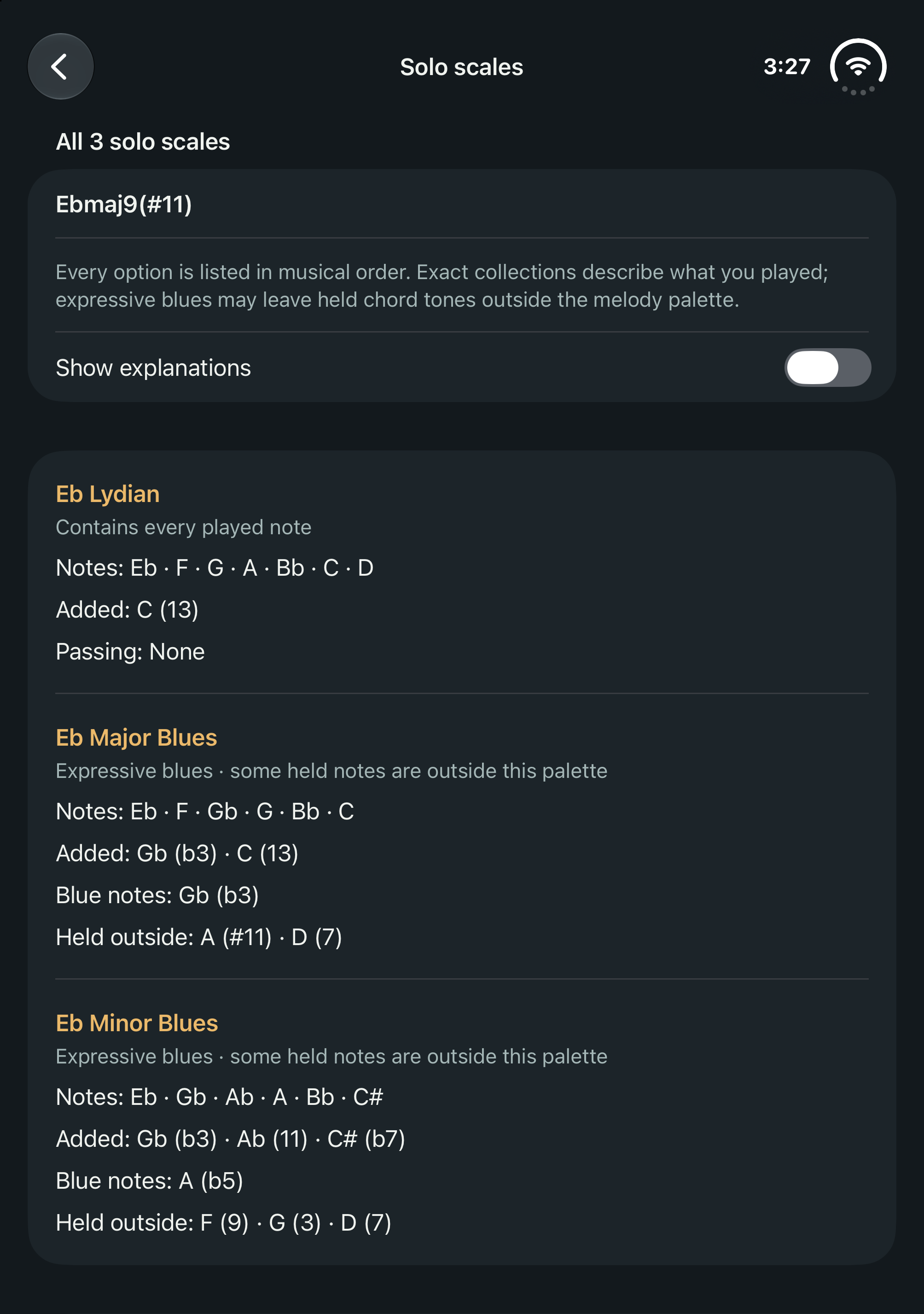
Open Solo scales to compare melodic options. Your chosen chord and session key guide the suggestions. See each scale’s notes, added tones, and blues colors, then try them in your phrase.
Here, E♭maj9(#11) leads to three options. E♭ Lydian contains every played note. The major and minor blues scales offer different colors, with held chord tones outside their palettes clearly listed.
Turn on explanations in the app when you want to explore the reasoning.
02 / SEE WHAT THE PEDAL HOLDS
Release a key with the sustain pedal down and its note is still part of the harmony. Chordglass distinguishes it from the keys you’re pressing. Show a student why the chord remains, even after your fingers have moved.
On iPhone and iPad, tap sustain to hold a voicing without a hardware pedal. Moving a connected pedal gives it control. For pedals that work backward, see sustain setup in Support.
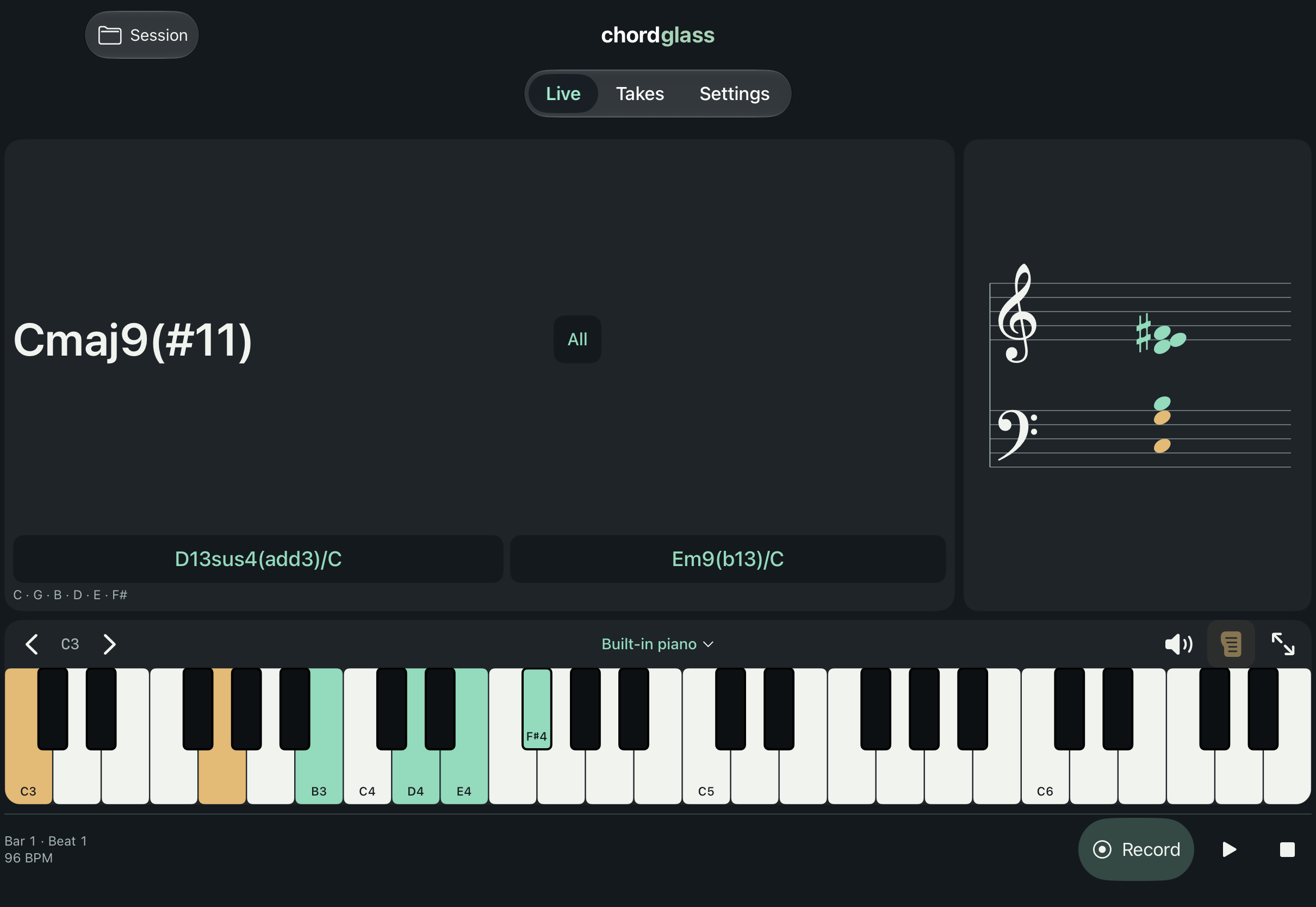
C3 and G3 have been released under the pedal. B3, D4, E4, and F♯4 are still pressed. Together, they form Cmaj9(#11).
03 / COMPARE THE NOTES
A passing tone or a raised fourth can change the sound of a line. These four examples all start on C, making their differences easy to see. Choose one below; in the app, hold all its notes together to explore exact matches.
A raised fourth and flat seventh, the fourth mode of melodic minor.
C · D · E · F♯ · G · A · B♭
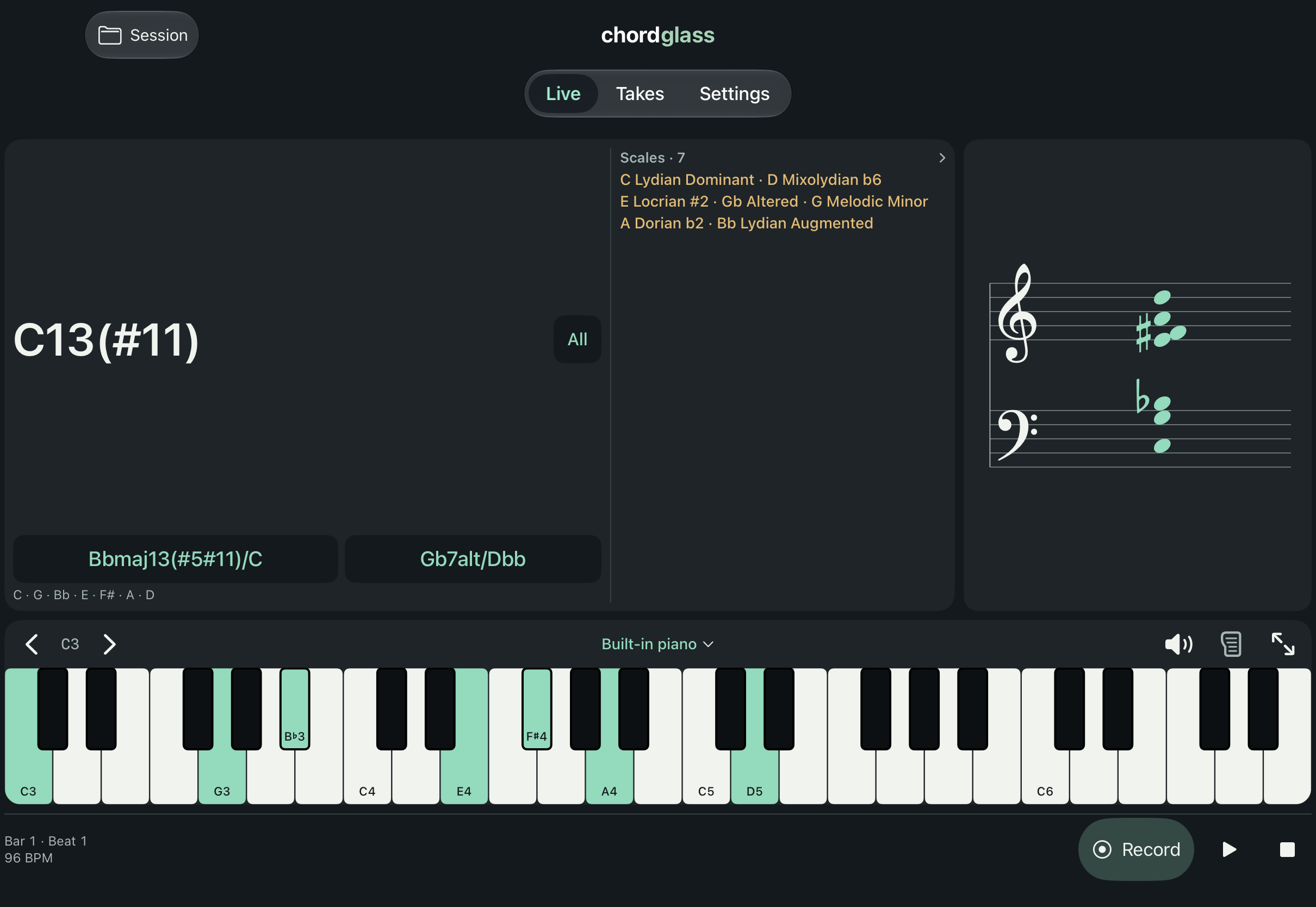
These examples show exact matches for the notes sounding together. Solo is a separate way to explore scale options for a chord: choose an interpretation and a session key, then compare added notes, passing tones, and the reasons for each suggestion.
04 / FIVE NOTES, TWO READINGS
Play C, D, E, G, and A together, then open the exact scale matches to compare C Major Pentatonic and A Minor Pentatonic. The C6/9 chord reading offers another way to understand those same notes.
Play a phrase that settles on C, then one that settles on A. The collection stays the same; which note feels like home depends on the music around it.
Keep the idea in a session